.svg)
Investor Update
FY2025 Performance and FY2026 Outlook
September 2026
Animoca Brands Corporation Limited (ACN: 122 921 813; “Animoca Brands” or the “Company” or the “Group”) is pleased to report key unaudited financial and business highlights for the 12-month fiscal year ending 31 December 2025 (“FY2025”). This update provides a comprehensive summary of FY2025 performance across Animoca Brands' key business units, an outlook for FY2026, and the strategic rationale for the Company’s initiatives in agentic AI (see: Minds by Animoca Brands). The FY2025 results reflect contributions from the Company’s business units and subsidiaries, including The Sandbox, Open Campus, Anichess, Moca Network, GAMEE, and TinyTap.
STRATEGIC AND CORPORATE OVERVIEW
FY2025 — Group Highlights
FY2025 was a year of deteriorating market conditions caused by the backdrop of tariff wars, memecoin repricing, and large-scale digital asset deleveraging experienced in October 2025. Despite this, Animoca Brands navigated through volatile market conditions and invested in new product lines that position the Company for future growth.
FY2025 represented a strategic transition toward AI-integrated operational workflows and agentic AI product offerings (in particular, Minds by Animoca Brands), coupled with deliberate rationalisation and structural cost reduction. Across all business units, organizational optimization has resulted in streamlined cost structures, accelerated production velocity, and a commercial readiness for strategic launches in 2026.
Additionally, the Group prioritized institutional enterprise initiatives and consumer-centric retail products. Management has observed substantial corporate adoption of digital assets and distributed ledger technology, and projects that this trajectory will persist. Consequently, the Company’s focus has expanded to institutional offerings, including stablecoins, real-world asset (RWA) tokenization, and treasury management. This strategic orientation governs the Company’s core token-based initiatives, including Moca Network (MOCA) and Open Campus (EDU), which have secured institutional partnerships and commercial enterprise sales.
Corporate governance, accelerated financial reporting, and structural readiness for public market listing remain the Company’s primary mandates. Following the transition to a Group auditor with greater resources, the Company finalized and issued FY2021 audited financial statements (AFS) in June 2025, FY2022 AFS in January 2026, and FY2023 AFS in July 2026. The preparation of AFS has accelerated significantly relative to preceding years, providing compliance milestones necessary to achieve readiness for relisting the Company’s shares.
Key Themes and FY2026 Strategic Horizon
A review of the Company’s commercial developments, investor communications, and operational milestones highlights five dominant strategic principles driving the FY2026 operational horizon.
1. Path to Public Market Readiness: The Company continues its focus on the pathway to public capital markets. Management has prioritized the completion and lodging of outstanding audited financial statements, which represents one of the gating conditions to fulfill the Company’s listing initiatives.
2. AI Agents and Agentic Commerce: The Company has launched Minds by Animoca Brands, an agentic AI consumer product focused on the mass market. The internet is shifting to an agentic-centered experience where users no longer primarily surf the internet directly, but instead instruct AI agents to navigate information and perform actions on their behalf. In the near future there will be hundreds of billions of AI agents operating across the internet, and many of them will require the ability to transact with each other. Blockchain technology is the perfect rail for agentic transactions because it operates 24/7, easily processes micro-transactions, and is highly programmable via smart contracts. Minds by Animoca Brands is designed to serve the intersection of AI and blockchain, bringing agentic commerce to the masses.
3. Institutional Finance: Material initiatives across the NUVA real-world asset (RWA) marketplace, Anchorpoint Financial, and GROW Digital Wealth collectively established a structured framework to deploy compliant solutions for bridging traditional finance (TradFi) capital with on-chain financial infrastructure.
4. Regulatory Expansion and Maturation: Achieving the Abu Dhabi Global Market (ADGM) in-principle approval, securing the Dubai VARA Virtual Asset Service Provider (VASP) license, and obtaining the formal Hong Kong Monetary Authority (HKMA) stablecoin issuer license via the Anchorpoint Financial joint venture reflect a group-wide transition from a digital asset and Web3 operator to a regulated, multi-jurisdictional financial services institution.
5. Token Ecosystem Consolidation: The completion of the Anichess token generation event (CHECK token), the listing of MOCA Coin on tier-1 centralized trading platforms Kraken and Coinbase, Bithumb, and other exchanges, the launch of MocaPortfolio, and the cross-enterprise adoption of Moca Network via SK Planet demonstrate a systematic focus on creating durable, sustainable, utility tokens anchored by verified real-world demand.
6. Group-Wide AI Integration: The Company’s utilization of artificial intelligence has scaled from initial experimentation to become a core structural asset across the entire organization. Scale AI deployments range broadly, providing enhanced capabilities across all levels of the Group, including: automating creative asset generation pipelines and workflows; optimizing engineering security screening protocols; and driving the complete AI-led platform rebuild of The Sandbox. AI adoption and integration are now structural and group-wide, and represent the most consistent operational thread across all business units.
SUMMARY OF FINANCIAL PERFORMANCE
2025 Financial Highlights — Full Year Summary (unaudited, non-IFRS measures)
The Company recorded Bookings(1) of US$173 million for the 12-month fiscal period ending on 31 December 2025. Bookings by core reporting segment—the Company’s business pillars— comprise the following:
- Pillar 1 (Digital Asset Advisory): US$25 million derived from the Digital Asset Advisory (DAA) business unit, encompassing trading activity and decentralized node operation services;
- Pillar 2 (Digital Asset Operating Businesses): US$95 million generated from the digital asset operating units of subsidiaries and projects incubated by the Company, which include blockchain-based sales as well as in-app purchases and other non-blockchain sales;
- Pillar 3 (Investments and Asset Management): US$53 million originating from investments and assets management activity, which includes realized gains from digital asset investments and investment management fees from Animoca Ventures (all unrealized investment gains are reflected in the financial asset balances).
Operating expenses (excluding non-cash and non-token-based payments such as equity share-based compensation payments) totaled US$175 million for the 12-month fiscal period ending on 31 December 2025, a US$65 million reduction from the prior year resulting from continued efforts to streamline operations.
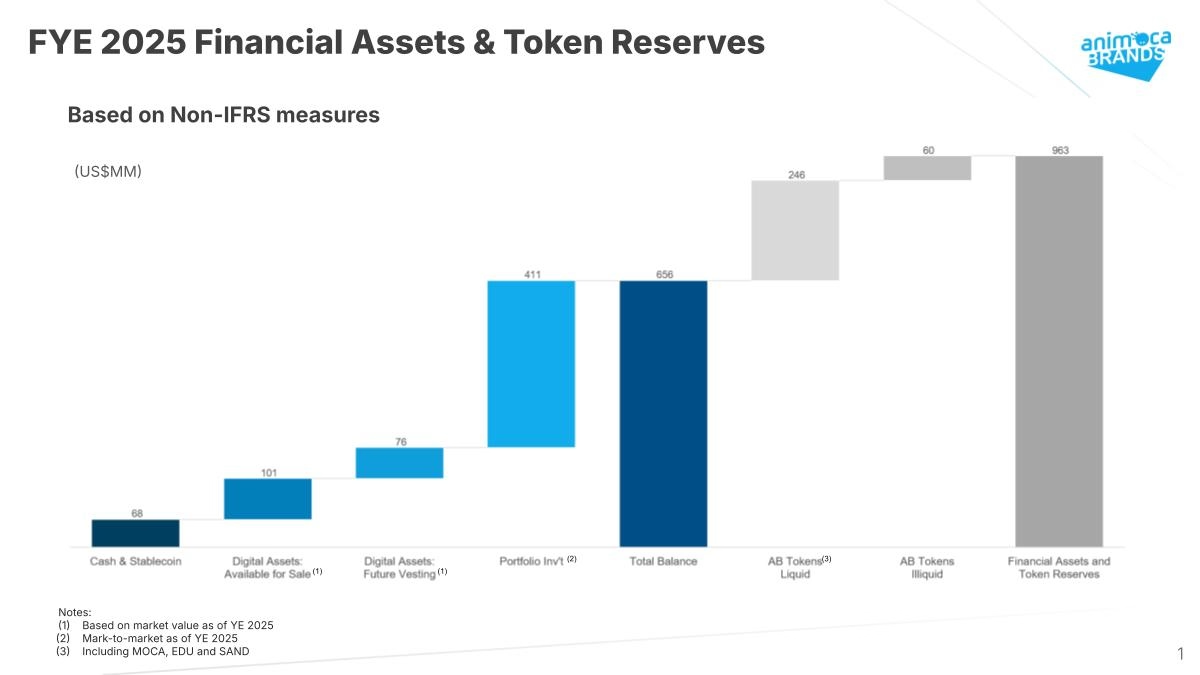
Financial asset balances and token reserve positions held as of 31 December 2025 include the following:
- Cash and stablecoin balances of US$68 million;
- Digital assets valued at US$177 million, composed of US$101 million in available-for-sale assets and US$76 million in unvested digital assets subject to time-based balance sheet lock-up restrictions. Major liquid tokens held on the balance sheet include BTC, ETH, SOL, and others;
- Minority investments in over 620 portfolio companies across 20+ sectors. The consolidated fair value of the Company’s minority investment holdings is US$411 million;
- Off-balance sheet token reserves(2) of US$306 million, comprising utility tokens issued by majority-owned operating subsidiaries and projects for which Animoca Brands serves as a strategic launch partner. These reserves include ecosystem tokens such as SAND, EDU, MOCA, GMEE, and others.
Financial Commentary
FY2025 was characterized by high volatility and consistent economic headwinds across the digital assets sector. During the first half of the fiscal period, macroeconomic variables surrounding international trade tariffs contributed to significant repricing of high-risk assets and impacted utility token valuations. Coupled with liquidity shocks driven by outsized memecoin token volumes and activity (e.g., $TRUMP), the industry experienced significant sell-offs in the utility token space. Consequently, the Company’s balance sheet asset valuations retraced relative to the prior fiscal year.
The decrease in cash and stablecoin balances relative to the prior year was primarily driven by the Company’s allocation of capital toward the repayment of over US$160 million in maturing corporate debt during the 2025 fiscal period, predominantly related to convertible notes issued in 2022.
Cyclical market draw-downs contributed to a decline in bookings performance, with the DAA segment (Pillar 1) experiencing the most pronounced contraction. Although the token advisory pipeline maintained high operational volume throughout FY2025—completing 24 token launches compared to 25 launches in FY2024—the average valuation of these token launches contracted by approximately 75% over the previous year, reflecting lower asset-class pricing across the industry.
Despite systemic sector and market headwinds, the Company delivered a resilient bookings performance. The Group’s operating businesses and its investments and asset management business (Pillars 2 and 3) demonstrated structural stability under challenging conditions. Pillar 2 bookings contracted by 11%, while Pillar 3 adjusted downward by only 5%. This performance validates the risk-mitigation value of the Group’s diversified business pillars, product mix, and strategic scope across the broader sector.
Financial Adjustment Disclosure: Financial performance metrics shifted from previously disclosed figures through Q3 2025, which were originally presented during the Annual General Meeting held on 9 December 2025. This reconciliation was primarily driven by the conservative removal of US$25 million in service revenue accrued in Q2 2025 that did not move to final legal closing prior to the termination of the fiscal period. Refer to the quarterly performance breakdown attached to this Update for further details.
Regarding operating expense structures, during FY2025 total operating expenses declined by 27% relative to the prior fiscal year, representing a notable acceleration over the 12% expense reduction achieved in FY2024. Management projects this trajectory in cost-containment to persist and accelerate during FY2026. The Company continues to focus rigorously on structural cost discipline through the implementation of AI tools, the reallocation of corporate capital into higher margin business lines, and targeted headcount rationalization across multiple divisions.
Explanatory Notes on Financial Methodologies
Note (1): “Bookings” is a non-IFRS metric of the total consolidated sales and income-generating activity of the Company, a methodology common within the digital entertainment and interactive gaming sectors to more effectively represent economic performance. The metric represents the total sales activity of the Company, combining revenue recognized on the income statement with deferred revenue, which is a liability on the balance sheet. Deferred revenue is an accounting concept that represents payments received for sales that have not yet been earned. It generally applies to digital assets sold in the Company’s interactive games and software applications. While the Company collects immediate settlement for these transactions, it is not able to recognize them as revenue on the income statement because an ongoing corporate obligation exists to provide future services and platform utility within those games and applications over a specified time period. As these services are delivered over time, deferred balances become recognized as revenue.
Note (2): “Off-balance sheet token reserves” are not classified as corporate assets under current prevailing international accounting standards and are omitted from formal balance sheet statements. However, the economic utility and underlying value of these token reserves can accrue to the Group over time as tokens are strategically deployed to fund user acquisition, incentives, and engagement programmes across the Company’s Web3 platforms and applications.
REGULATORY, COMPLIANCE, LICENSING
Regulatory Expansion and Geographic Footprint
Hong Kong
Anchorpoint Financial
Anchorpoint Financial (“Anchorpoint”) is a strategic joint venture established between Standard Chartered Bank (HK), HKT, and Animoca Brands, following their joint participation in the Hong Kong Monetary Authority (HKMA) stablecoin issuer sandbox since July 2024. Anchorpoint was among the first corporate entities to formally express interest with the HKMA, on the same day the Stablecoins Ordinance came into effect, with the objective of launching licensed stablecoins, with the first being backed by the Hong Kong Dollar (HKD).
On 10 April 2026, Anchorpoint officially received a formal stablecoin issuer license from the HKMA, making it at the time of this report one of only two institutions licensed under the territory’s newly enacted Stablecoins Ordinance, and clearing the path for the development and deployment of regulated products throughout 2026 under its B2B2C approach.
Anchorpoint will serve as a compliant, institutional gateway bridging traditional fiat settlement rails to focus on payments, settlement, and tokenized asset use cases, and to service the future high-velocity automated machine-to-machine transactions required by the emerging agentic economy.
Anchorpoint draws on the complementary strengths of its three founding shareholders: bank-grade custody and settlement infrastructure from Standard Chartered; distribution reach and telecommunications connectivity from HKT; and the Web3 product architecture and digital asset ecosystem access from Animoca Brands. This structure was deliberately assembled to satisfy both the operational requirements of the HKMA licensing regime and the commercial realities of reaching enterprise clients at scale globally.
Product development is underway, with early pipeline conversations focused on supply chain finance and cross-border payment corridors - use cases where programmable, regulated stablecoins offer material efficiency advantages over legacy rails. The company's leadership is engaging prospective B2B partners across the financial services and fintech sectors, with formal product launches expected to follow as the regulatory framework matures and counterpart institutions complete their own compliance onboarding.
Middle East
The Middle East region has served as a key strategic growth market for the Company since 2022. With its clear frameworks for digital asset regulation, market access, innovation, and capital flows, the region has emerged as a core operational hub for the Group’s activities, particularly institutional enterprise initiatives.
Milestones achieved during and after the reporting period include:
- Abu Dhabi Global Market (ADGM) In-Principle Approval: On 24 November 2025, Animoca Brands received in-principle approval from ADGM’s Financial Services Regulatory Authority (FSRA) to operate as a regulated Fund Manager. This framework authorizes the Company to manage a Collective Investment Fund within or from the Abu Dhabi Global Market.
- Dubai VARA VASP licence: In February 2026, Animoca Brands secured a Virtual Asset Service Provider (VASP) licence from Dubai's Virtual Assets Regulatory Authority (VARA), solidifying the Middle East as a strategically important regulated hub for the activities of the Group.
- First Regional Office: Animoca Brands has established its first regional office in Dubai, United Arab Emirates. The Company appointed Omar Elassar as Managing Director for the Middle East and Head of Global Strategic Partnerships.
BUSINESS SEGMENT UPDATES
Pillar 1 — Digital Asset Advisory (DAA)
Rising off an exceptionally strong FY2024, Animoca Brands maintained an active advisory and investment presence within the ecosystem in spite of a broader contraction in the digital asset markets during FY2025. The Group's token advisory pipeline remained consistent, completing 24 token launches in FY2025 (compared to 25 in FY2024) across AI, real-world assets (RWAs), and consumer and infrastructure verticals. Notably, in April 2026, the Company partnered with OneFootball to launch the OFC token ahead of the summer FIFA World Cup 2026. Additionally, the DAA business unit actively engaged with over 20 token foundations to provide liquidity provisioning and node validation services.
The Digital Asset Advisory unit continued to build a steady pipeline of advisory mandates derived from the Group's investment activities, strategic collaborations, and accelerator initiatives. Management has observed a clear trend of strong founding teams building a new generation of products that leverage expanding AI capabilities alongside Web3 infrastructure. Consequently, Animoca Brands has positioned its advisory and investment resources to identify and support these teams at an early stage. Recent examples include:
- April 2025 (The R[3]sidency Accelerator): In collaboration with Coinbase, Fabric Ventures and Founders Factory, the Company established The R[3]sidency, a 16-week accelerator program to support the UK’s blockchain and AI ecosystem. The inaugural cohort of participating projects was subsequently announced in Q1 2026.
- March 2026 (Ava Labs Strategic Collaboration): The Group executed a strategic investment and collaboration with Ava Labs to expand the Avalanche network ecosystem, prioritizing key growth verticals including entertainment, real-world assets, and decentralized digital identity.
- May 2026 (Minds Investment Programme): The Company launched the Minds Investment Programme with a capital commitment of up to US$10M, structured to finance and support impactful and innovative applications utilizing the Minds by Animoca Brands platform as a core product layer.
Node operations have continued to scale: the Group onboarded as a leading validator on MultiversX in February 2025 and was welcomed as an institutional masternode validator on XDC Network in May 2026, extending its on-chain infrastructure footprint across trade finance, digital identity, and enterprise blockchain use cases.
Collectively, these activities position the Digital Asset Advisory unit as the Group's ecosystem origination engine, generating deal flow, building institutional relationships, and producing market intelligence that compounds in value across all three business pillars. As the regulatory environment matures and institutional participation in digital assets deepens, the Company believes the business unit will continue to be well-placed to capture advisory mandates from both Web3-native projects and traditional financial institutions seeking a credible, operationally capable partner for their digital asset strategies.
Pillar 2 — Operating Businesses
Minds by Animoca Brands
Strategic Rationale and Market Opportunity
The expansion of agentic AI represents a primary growth opportunity for Animoca Brands. The global agentic AI market is estimated at US$19.33 billion for 2026 and is projected to reach more than US$205 billion by 2033, expanding at a compound annual growth rate (CAGR) of 40.2% (source: Agentic AI Market, MarketsandMarkets, August 2026). This rapid trajectory is driven by a general transition from passive conversational AI assistants toward autonomous software systems capable of planning, coordinating, and executing complex, multi-step workflows.
The term “agentic web” refers to the emerging internet paradigm in which autonomous AI agents act on users' delegated intent, effectively “replacing” much of human online activity. The Company identifies significant synergies between the agentic web and digital asset infrastructure, because autonomous AI agents will depend fundamentally on decentralized and programmable layers to operate at scale and conduct financial transactions. These foundational layers include stablecoins, tokenized real-world assets, sovereign digital identity protocols, and verifiable on-chain reputation.
Autonomous software agents that independently coordinate and execute multi-step tasks require dedicated infrastructure for programmatic micro-settlements and identity verification. Traditional financial and identity rails therefore present at least two sets of structural limitations for agents.
Firstly, legacy banking channels are poorly suited for the high-frequency, high-speed micro-transactions (often just fractions of a cent) required for AI agents to settle real-time payments for compute and data. Blockchain architecture addresses these micro-settlement constraints by provisioning individual agents with native digital wallets for instant, automated settlement secured on digital ledgers.
Secondly, existing centralized authentication protocols cannot verify an agent's origin, ownership, or creator, and are therefore unable to reliably provide “Know Your Agent" (KYA) for transparent provenance and accountability. Blockchain technology directly addresses these challenges in identity verification. The Company’s Moca Network AIR platform is a decentralized identity verification system that includes a KYA layer which establishes an immutable, on-chain record of an agent’s origin, ownership, and operational history. This ensures that governance and accountability are verifiable by protocol rather than promised by a centralized provider.
Since the comparatively long settlement periods of traditional financial rails are not well suited to high-speed agentic transactions, the rise of the agentic economy underscores the long-term utility and importance of programmable digital assets. As agents coordinate, transact, and exchange value at a rapidly increasing scale, digital tokens will serve as the native economic layer for machine-to-machine commerce.
Animoca Brands’ capabilities in decentralized identity and payment, combined with its considerable operational and investing experience across AI, blockchain, and mass consumer projects (such as The Sandbox, Open Campus, and GAMEE) position it as an early market leader in user-owned, decentralized agentic platforms. The Company views the intersection of AI and blockchain, and the transition to an agent-driven web economy, as a primary opportunity for value creation.
Minds Platform and Product Profile
Minds by Animoca Brands (“Minds”), accessible via the hellominds.ai website, is a platform that provides personalized, persistent autonomous AI agents. It is engineered to remove all technical complexity for both developers and general users and preserve their full operational control and customization over AI agents. The platform enables any user, regardless of technical knowledge, to deploy sovereign, highly-networkable, always-on AI agents, called Minds, without requiring local servers, manual hardware management, AI model subscriptions, or software updates.
The Minds platform provides personalized agents that operate asynchronously across email, messaging networks, and applications to coordinate tasks and execute multi-layered workflows on behalf of their users. The project’s primary development focus is to deliver immediate and sustained practical utility on an autonomous basis, transitioning AI capabilities beyond the isolated, chat-based interface experiences that currently dominate the market.
Minds by Animoca Brands is a blockchain-native platform, and the Minds and their underlying data training sets are tokenized user-owned assets. This means that humans retain clear digital property rights over their Minds and the creations of their Minds, and can transfer or lease them similarly to how a digital asset is transferred or leased, which enables users to better benefit from the economic value generated by AI models.
This economic architecture extends into a creator economy layer for modular AI capabilities. When a user or Mind authors a discrete operational capability, called a "Skill," that capability can be tokenized and listed to be equipped by any other Mind. Whenever other Minds execute workflows utilizing that Skill, a portion of the cognition tokens consumed during execution is automatically routed to the original creator of the Skill. This incentive structure encourages community-driven software development, enabling creators to directly capture tokenized value generated by their functional Skills within a self-sustaining platform ecosystem.
Animoca Brands believes that the simplicity and practical directness of the Minds platform can help to enhance AI literacy, make advanced agent software more accessible to non-technical audiences, and better prepare corporate and retail users for the opportunities, disruptions, and operational shifts associated with the rise of the agentic web.
Operational Milestones
Minds by Animoca Brands alpha-launched in February 2026 and transitioned to beta in May 2026. The platform recently achieved a number of significant milestones:
- Minds reached a processing volume of 936 billion monthly tokens in July 2026. For context, OpenClaw (the highly popular open-source AI agent that originally shifted public perception of AI from just a chatbot to an active coworker) reached 4.2 trillion tokens in the same month.
- Minds was ranked #8 overall among all AI applications tracked on OpenRouter.ai in July 2026, holding the #1 positions in Entertainment, Roleplay, Creative Writing, and Gaming, as well as #3 in Productivity.
- In July 2026, Minds conducted a live pilot with Visa in which Minds agents successfully identified eligible Visa cardholder rewards and completed purchases at select merchants, combining tokenized payment credentials with transaction controls (refer to announcement of 8 July 2026).
- Minds deployed its new specialized "Game Designer Mind" agent archetype for the inaugural VibeBlitz Game Jam on the vibecode.game platform, in partnership with YGG. More than 250 participants submitted 72 launch-ready games built using a Game Designer Mind and the vibecode.game platform. The activation highlighted the utility of Minds in AI-assisted game design, concept ideation, mechanics prototyping, and asset creation, positioning Minds as a powerful collaborative co-creator for rapid interactive media development. For more details on the VibeBlitz Game Jam, including links to the winning games designed with Minds, please refer to the announcement of 11 August 2026.
The Minds software integration layer now supports over 320 external applications, including:
- Productivity Suites: Google Suite and automated email workflows.
- Communication Infrastructure: Telegram messaging network.
- Financial Services: SuperiorTrade platform.
- Social Architecture: LinkedIn, Instagram, Discord.
- Education: GoEddy, an AI-powered conversational tutor and educational platform being integrated into Minds to serve as its education layer.
User Workflows
- Automated Workflow (Inbox to Execution): Minds execute automated email triage, extract key action items, and route structured data into repository tools such as Google Sheets or Notion.
- Information Synthesis and Management: Minds generate daily operational digests, aggregating and summarizing high volumes of instant messages, emails, and data feeds into concise, structured updates.
- Software Engineering and Code Generation: Specialized coding Minds assist with full-stack software development, script automation, code debugging, and rapid application generation, enabling both technical and non-technical users to build and deploy software tools.
- Interactive Media and Game Design: Minds agents execute concept ideation, game mechanics prototyping, narrative scripting, and visual asset generation, enabling creators to build launch-ready games and interactive environments (as demonstrated during the VibeBlitz Game Jam).
- Lifestyle and Educational Coordination: Deployment of adaptive educational tutors (integrated with GoEddy), dietary planners, and logistical assistants that dynamically align with individual user routines without requiring manual setup.
- Strategic Discovery and Outreach: Specialized Minds conduct automated event scouting, market leads discovery, and opportunity profiling, generating tailored outbound communications for targeted business development opportunities.
- Asset Management (Trading Workflows): Execution of programmatic financial workflows, including trading strategy design, historical backtesting, paper trading, and live execution via SuperiorTrade.
Partnerships and Ecosystem Alliances
The development of the Minds platform is supported by several core partners including Ethoswarm Inc. (backend network infrastructure; Animoca Brands is an investor in Ethoswarm), Moca Network’s AIR platform (secure login, identity authentications, and credentialing), Open Campus (decentralized educational distribution channels), TinyTap/GoEddy (interactive learning layer), and The Sandbox (concierge-style AI experiences leveraging a broad portfolio of brand IPs).
Brand Positioning
Minds by Animoca Brands is positioned as an easily accessible gateway to the emerging agentic economy, designed around immediate usability rather than abstract technical complexity. The product framework and core branding eliminate onboarding friction, appealing directly to both everyday retail users and small-to-medium enterprises (SMEs) by shifting user interaction from continuous manual management to autonomous, outcome-driven execution.
Special Shareholder Update: Minds by Animoca Brands
For additional information about Minds by Animoca Brands please refer to the Company’s Special Shareholder Update of 6 August 2026.
NUVA - RWA Marketplace
Animoca Brands entered into a strategic partnership with ProvLabs to develop NUVA, a non-custodial, unified distribution infrastructure layer for high-quality real-world asset (RWA) vaults. NUVA provides users with streamlined access, enabling market participants to efficiently allocate stablecoin assets to mint liquid, composable, yield-bearing tokens.
For financial institutions, NUVA acts as a universal distribution pipeline providing the technical rails to move tokenized RWAs from specialized networks, such as the Provenance blockchain, directly into public networks like Ethereum. For consumers, NUVA serves as a marketplace to swap stablecoins for tokens that represent RWAs. These assets—like treasury bonds or home equity lines of credit—are capable of generating continuous yield.
On 13 May 2026, NUVA officially launched on the Ethereum Mainnet, introducing its initial flagship asset vaults:
- nvYLDS: a vault containing YLDS, a U.S. SEC-registered instrument backed by short-dated treasuries and commercial bank deposits.
- nvPRIME: a vault backed by native PRIME tokens that provides decentralized exposure to Figure’s US$17.4 billion pool of natively on-chain prime home equity lines of credit (HELOCs).
On 28 May 2026, Nuva Digital, the software development company that manages the development of NUVA, announced the successful closure of a US$5.2 million seed financing round led by Morgan Creek Digital to accelerate the development of the NUVA platform.
Moca Network
Moca Network’s AIR Platform
Moca Network represents one of Animoca Brands' primary long-term infrastructure positions. Through its proprietary Account, Identity, and Reputation (AIR) platform, Moca Network is developing the foundational infrastructure required by large-scale consumer platforms to function as decentralized financial networks.
Enterprise platforms with established distribution networks and active user bases are emerging as structurally well-positioned to manage next-generation financial relationships. These entities require chain-agnostic infrastructure layers to manage identity verification, programmable settlement, and loyalty. AIR was engineered to serve that demand.
Market Opportunity
The opportunity for platform-embedded finance is well established. For example, in 2025 Delta Airlines' co-branded credit card partnership with American Express generated US$8.2 billion, representing a revenue stream that regularly outpaces the profitability of its core airline business.
Despite this significant potential, the wider market remains structurally inefficient: global digital advertising fraud exceeds US$100 billion annually; unredeemed loyalty point liabilities create persistent balance-sheet drag for corporations and identity verification costs platforms approximately US$3 to US$5 per user at every onboarding, duplicated across fragmented network integrations.
These inefficiencies represent structural overhead incurred universally by digital platforms operating at scale. The AIR platform mitigates these systemic frictions via a single shared infrastructure layer providing sovereign identity verification that moves with the user, cryptographic payment rails for immediate settlement, and loyalty solutions that function as a dynamic utility asset rather than a balance sheet liability.
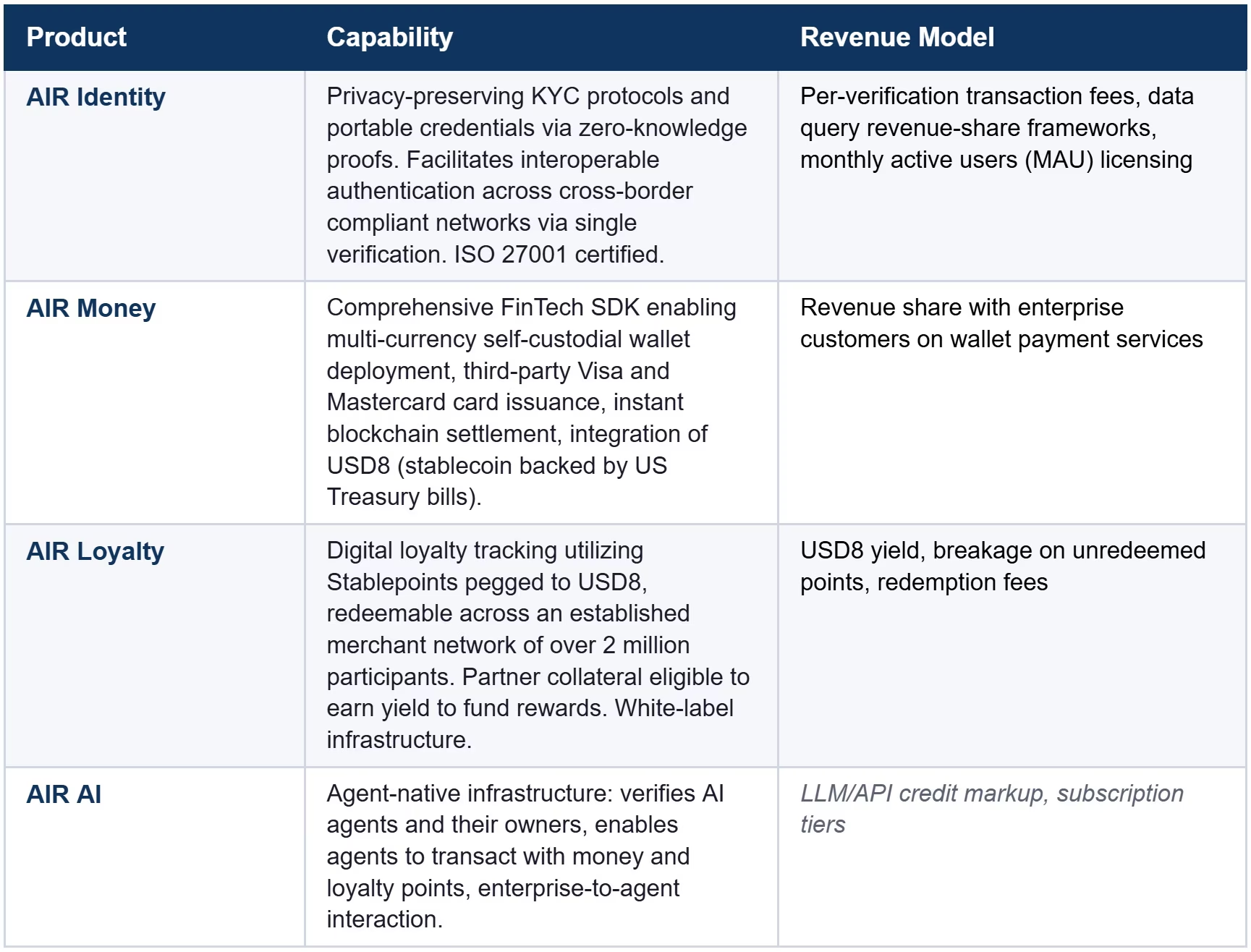
The AIR Platform — Four Integrated Products
AIR operates across four interdependent products, each generating independent commercial revenue streams while reinforcing the other products and driving network-effect utility across the broader ecosystem:
Lighthouse Partners Commercial Traction
AIR's go-to-market is anchored by a set of lighthouse partnerships that validate the model across entertainment, telecoms, financial services, and government:
.avif)
Moca Network maintains over 2.6 million MocaID users and holds a MOCA token reserve valued at US$131 million as of 31 December 2025, which can be deployed to support the growth of the platform. Supported by live operational deployments with global entertainment conglomerates such as UMG—the world’s largest music company—and large-scale consumer networks such as SK Planet and OneFootball, Moca Network enters FY2026 as a premier commercially advanced identity and payments infrastructure solution.
The Sandbox
The Sandbox — FY2025 Performance Highlights
FY2025 served as a period of structural realignment for The Sandbox. The Company systematically rationalized operations to optimize efficiency and align the business unit with evolving market conditions and product development trajectories. Three concurrent initiatives drove this transformation:
- Restructuring and Cost Rationalization: Total headcount was reduced from 240 to 92 personnel (−62%) during FY2025, with ongoing efficiency adjustments continuing into the first half of FY2026. As a direct result of headcount optimization and operational rightsizing, consolidated operating expenses declined by more than 75% year-on-year.
- AI-Led Product Strategy: Over the past two years, a streamlined, highly specialized internal team has been developing a next-generation product designed to deliver a comparable metaverse experience utilizing an optimized workforce allocation paired with advanced computational efficiency. This transformation is anchored by a potential strategic acquisition, which would facilitate a comprehensive infrastructure relaunch of The Sandbox. The rebuilt platform will lower development costs and support cross-platform content creation across mobile, web, Web2 and Web3 environments, utilizing the native SAND utility token as the underlying economic layer.
- Ecosystem Deployments and Outlook: The Sandbox successfully launched Alpha Season 6 in Q3 2025, integrating intellectual property from global brands including Black Mirror, The Smurfs, Cirque du Soleil, and King Kong. Operational performance met the Company’s targets, recording approximately 4,500 alpha passes sold, 52,000 unique users, and a 9% conversion rate. In April 2026, The Sandbox completed Alpha Season 7, deploying over 30 distinct experiences and allocating 650,000 SAND for ecosystem participation rewards. Season 7 marks the final operational deployment under the current legacy architecture prior to the AI-integrated product and infrastructure reboot.
Open Campus
FY2025 Performance Highlights
Open Campus achieved meaningful ecosystem expansion during the 2025 fiscal period, though the business unit encountered headwinds converting traction into sustainable monetization. To address these structural conditions, the Company initiated a comprehensive cost restructuring entering the 2026 fiscal year.
EDU Chain — Mainnet Launch and Scale Metrics
In January 2025, Open Campus executed the mainnet deployment of EDU Chain, an operational Layer 3 blockchain architecture built utilizing Arbitrum Orbit. The network recorded US$150 million in total value locked (TVL) at launch. Core operational and builder metrics achieved during the fiscal period include the following:

Platform and Builder Ecosystem Growth
- User Acquisition and Onboarding: Open Campus successfully onboarded 1.1 million verified users via integrations with more than 80 EdTech partners, achieving an aggregate reach of over 22 million learners globally.
- Educational Financing: Open Campus facilitated approximately US$1 million in decentralized student loan originations. In FY2026, the facility successfully returned capital with interest to investors, completing the full loan cycle on-chain.
- Developer Ecosystem Activation: Formal “builder” programmes launched by Open Campus have engaged 18,772 developers, yielding 2,694 submissions and the incubation of 121 decentralized applications (dApps).
Pencil Finance — Decentralized Student Loan Financing
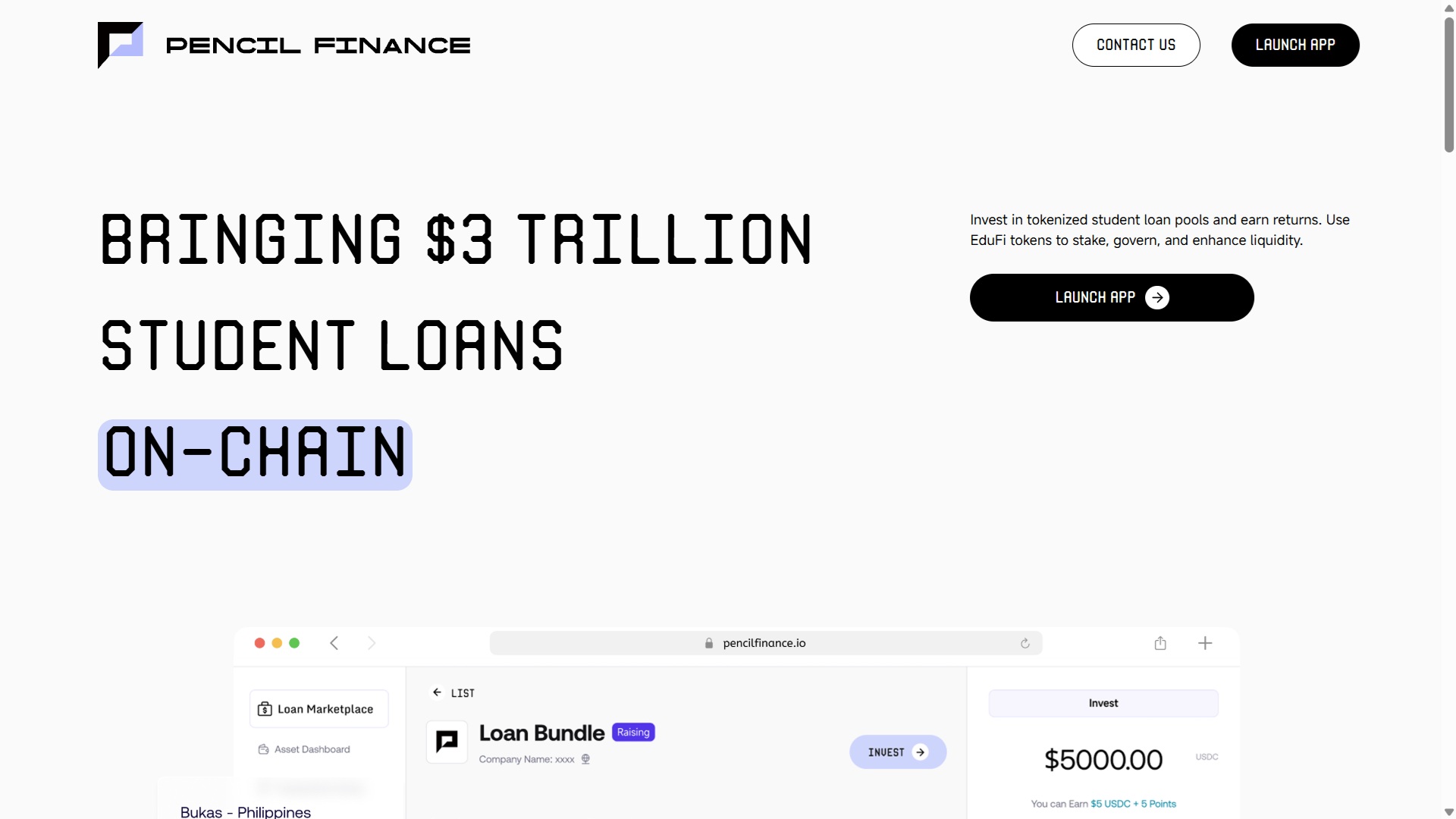
In Q2 2025, Animoca Brands and Open Campus jointly deployed US$10 million as loan collateral to Pencil Finance, a decentralized lending protocol for real-world education financing. Supported by the strategic allocation, in July 2025 Pencil Finance completed the initial historical issuance of on-chain capital dedicated exclusively to student loans. Open Campus targets the structured scaling of these tokenized educational financing instruments throughout FY2026.
Partnerships and Distribution
- Strategic Token Purchase Agreement: Open Campus and Animoca Brands formalized a strategic token management agreement with Nasdaq-listed ANPA (Rich Sparkle Holdings Ltd). Under the terms of the 24-month agreement, ANPA committed to acquiring up to US$50 million in native EDU tokens utilizing a combination of open-market and over-the-counter (OTC) transaction structures.
- Ecosystem Identity Scaling: The protocol reached an active footprint of 500,000 unique Open Campus IDs.
- Exchange Access Expansion: In October 2025, the EDU token became available in Hong Kong to certain institutional customers of Bullish exchange within the Hong Kong jurisdiction.
Open Campus FY2026 Outlook
The forward-looking operational horizon for Open Campus focuses on expanding its digital footprint across high growth emerging economies and advancing its specialized offerings.
- Vietnam Expansion: Open Campus aims to scale the regional user base to a range of 500,000 to 1 million verified active users through localized partnerships, including Luvia Learning, the widely used AI-powered EdTech platform and app backed by the Ministry of Education and Training.
- India Expansion: Open Campus is executing a government-led credential digitization initiative at the state-level in India. The project has successfully tokenized 10 million educational credentials, with active discussions underway to finalize state-level distribution agreements across five additional administrative jurisdictions.
- Open Campus Autonomous AI Agents: The business unit is developing a suite of AI-powered autonomous software agents designed to ingest verifiable credentials and sovereign user data. These agents are engineered to deliver automated, highly personalized educational curricula, career path guidance, and tailored micro-financial services. This initiative targets enhanced user platform retention, higher-margin institutional monetization, and defensible product differentiation by pairing agentic AI capability directly with cryptographic credential infrastructure.
Pillar 3 — Investments and Asset Management
Investment Portfolio Overview and Fair Value
Pillar 3 encompasses the strategic management of the Group's expansive, diversified portfolio, which includes minority equity and token positions in over 620 companies and projects across more than 20 market sectors. As of 31 December 2025, the unaudited fair value of these minority investment holdings is US$411 million. The Company treats this portfolio not merely as passive capital allocations, but as a dynamic ecosystem that enables the Company to identify and leverage programmatic synergies and technical integration pipelines for the Group’s core projects and operating subsidiaries. As an example, Ethoswarm Inc. (previously CryptoSlam Inc.) is both an entity that Animoca Brands has invested in as well as a key technology partner for the Group’s activities connected to agentic artificial intelligence.
About Animoca Brands
Animoca Brands Corporation Limited (ACN: 122 921 813) is a global digital assets leader building and investing in impactful technologies and ecosystems to reimagine future economies through AI and the agentic web. It has received broad industry and market recognition including Fortune Crypto 40, Top 50 Blockchain Game Companies 2025, Financial Times’ High Growth Companies Asia-Pacific, and Deloitte Tech Fast. Animoca Brands is recognized for building digital asset platforms such as the Moca Network, Open Campus, Anichess, and The Sandbox, as well as institutional-grade platforms; providing digital asset services to help Web3 companies launch and grow; and investing in frontier Web3 technology, with a portfolio of over 600 companies and digital assets. For more information visit www.animocabrands.com or follow on X, YouTube, Instagram, LinkedIn, Facebook, and TikTok.
APPENDIX
Financial Asset Balances and Summary Performance Schedules
(Unaudited; Non-IFRS Measures)
.avif)